Review: The Most Anticipated Casual Games of the Year
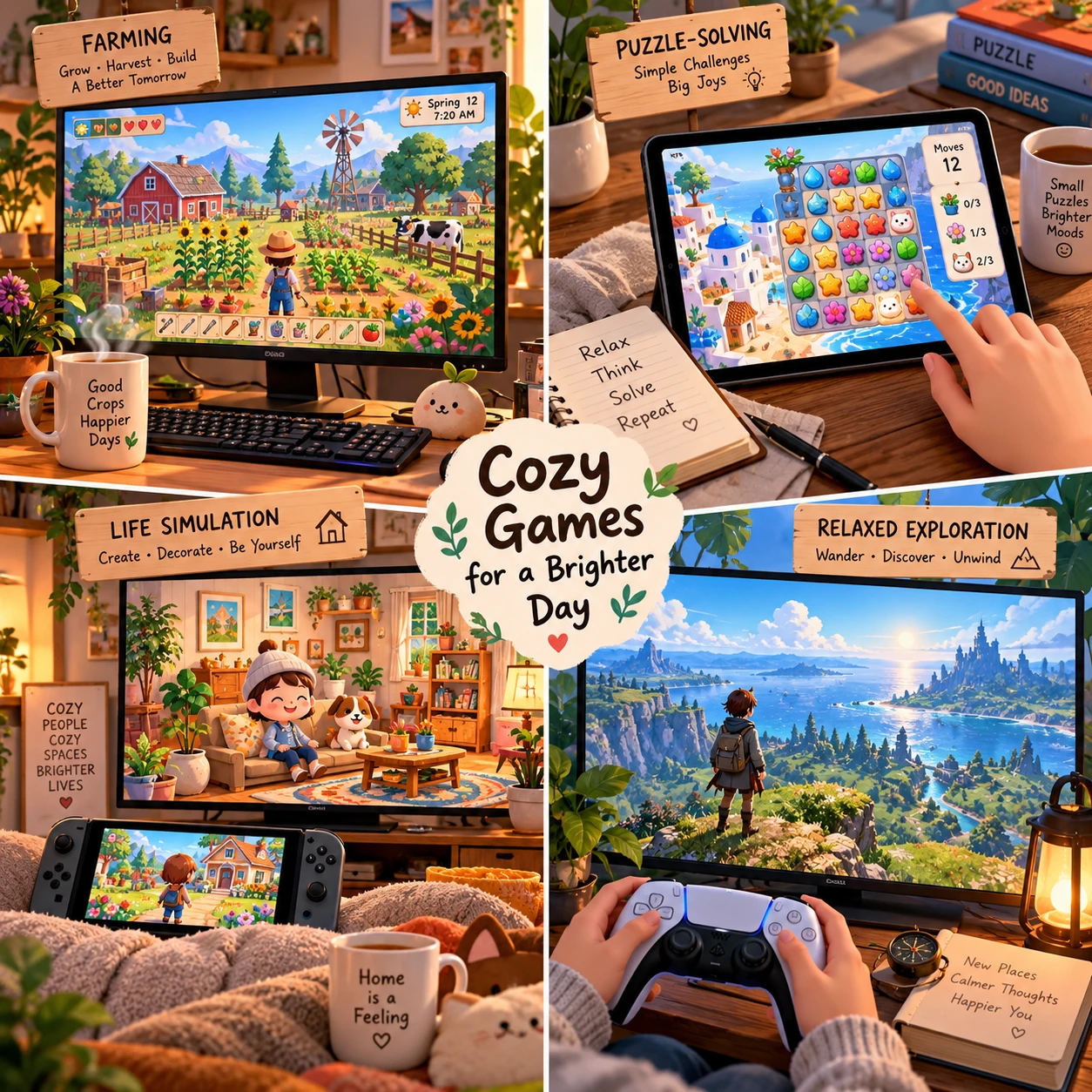
Casual games can be easy to pick up without being shallow. The most promising upcoming releases pair approachable controls with satisfying decisions, expressive worlds, or puzzles that stay interesting after the first session. This year’s watchlist spans cozy simulations, creative play, and thoughtful puzzle games, with options for quick mobile breaks as well as longer PC and console sessions.
Because release schedules and platform plans can change, this is a review-style guide to what makes these games worth watching, not a claim that every title has a confirmed launch date. Check each developer or publisher’s current announcement before pre-ordering or planning around a release.
What Makes a Casual Game Worth Anticipating?
A casual game is worth anticipating when it makes starting easy and gives players a reason to return. Strong accessibility, replayability, and satisfying gameplay mechanics matter more than a low difficulty level or a short session.
“Casual” describes how a game fits into someone’s life, not how much care went into making it. A puzzle game may offer a gentle introduction and later demand careful planning; a simulation may let players set their own pace while building a detailed routine. Both can reward attention without requiring competitive reflexes or hours of uninterrupted play.
- Low-friction play: Clear tutorials, readable interfaces, and controls that make sense quickly.
- Meaningful return: New puzzles, goals, customization, or discoveries give another session a purpose.
- A distinct mood: Cozy games can offer calm and companionship, while a brisk puzzle game may provide a focused challenge.
There is a trade-off: a welcoming pace can feel slow to players who want constant pressure, while daily tasks and long-term progression may turn a relaxing game into a routine. The best preview question is simple: does the core activity sound enjoyable even before rewards and unlocks arrive?
The Standout Casual Games to Watch
The standout casual games to watch are those with a clear hook and a play style that suits their intended audience. Since availability and release details can shift, treat these picks as examples of promising directions across the genre rather than a guarantee of launch timing.
Little Kitty, Big City
This playful exploration game puts a curious cat in a city full of small distractions. Its appeal lies in wandering, interacting with the environment, and following amusing detours rather than racing through a demanding campaign. It may suit players who like light exploration and humor; anyone seeking a complex simulation or a tightly guided story may want more structure.
Flock
Flock centers on flying through a colorful landscape and discovering unusual creatures. The gentle focus on exploration and collection makes it a natural fit for cozy-game fans who enjoy noticing details at their own pace. Its relaxed approach is part of the charm, though players who need combat or high-stakes objectives may find the pace too soft.
Little Chef: Cozy Cooking
Cooking games often turn familiar actions into a satisfying loop: gather ingredients, prepare a dish, and improve the result. A cozy take on the format can appeal to players who enjoy creative experimentation and low-pressure goals. Before committing, check whether the final game emphasizes open-ended cooking, timed challenges, or progression through a set of recipes; those choices make a big difference to the feel.
Upcoming puzzle and life-simulation releases
Keep an eye on newly announced puzzle games and life simulations, too. A compact logic game can be ideal for short sessions, while a life sim may offer character customization, relationships, crafting, or a routine that grows over time. These broad categories attract very different players, so trailers and demos are useful for judging whether the core mechanics look engaging rather than simply attractive.
Across this watchlist, the strongest prospects have a recognizable activity at their center: explore, collect, cook, solve, or shape a personal space. That clarity makes it easier to decide whether a game fits your tastes before launch.
Gameplay, Platforms, and Accessibility
Gameplay and platform determine whether a casual game feels convenient or awkward. Check how its controls, session length, interface, and accessibility options fit the device you plan to use.
Mobile gaming is well suited to short sessions and touch controls, but a small screen can make busy interfaces harder to read. PC games can benefit from a keyboard, mouse, controller support, and adjustable display settings, though a laptop or desktop may be less convenient for quick play. Console platforms often make controller-based play simple from the couch, but portability and cross-platform features vary by system and title.
Genre also changes the ideal setup. A puzzle game may work beautifully on a phone if its pieces are easy to manipulate. A simulation with many menus or detailed customization may feel better on a larger screen. Exploration games can be comfortable on a controller, but players who prefer touch or mouse input should confirm support rather than assume.
- Look for control options, including remapping and controller support.
- Check text size, subtitles, color settings, and other accessibility features.
- Find out whether saves transfer between devices, if you plan to play on more than one platform.
- Consider whether the game is designed for brief sessions or longer stretches.
Accessibility is not a bonus only for a small group; it can make a game easier to use for anyone. Still, a feature listed in a preview may change before launch, so verify it in the final store listing or patch notes.
Which Games Suit Different Players?
The right casual game depends on the kind of experience you want. Start with your preferred activity and mood, then use platform and session length to narrow the options.
- For puzzle fans: Choose games that show their rules clearly and build difficulty in fair steps. Look for hints or adjustable challenge if you want room to learn without getting stuck.
- For relaxed explorers: Try games built around wandering, discovery, and small environmental interactions. A slower pace is a strength if you enjoy finding your own goals.
- For creative players: Look for cooking, decorating, customization, or simulation mechanics that let you make choices and see their results.
- For short-session players: Check whether the game saves frequently and offers self-contained activities. That matters more than a label such as “mobile” or “casual.”
- For cozy-game fans: Pay attention to atmosphere, music, character interactions, and whether optional tasks stay optional.
A useful filter is to separate activity from presentation. A charming trailer might suggest a peaceful game, but timed tasks or repetitive chores could shape the actual experience. Watch gameplay footage, read early reviews once available, and ask whether you would enjoy the main loop without cosmetic unlocks. That small check can prevent a mismatch between a game’s mood and its mechanics.
Release Information and What to Check
Release information should be treated as provisional until the developer or publisher confirms it for the platform you want. Verify the date, regional availability, supported devices, and edition details through official announcements or the relevant store page.
Upcoming games may have different launch windows on PC, console, and mobile, and a date announced for one platform does not automatically apply to another. Early access, demos, and regional rollouts can also affect what “available” means. When a specific day has not been confirmed, a season or year is a window, not a promise.
Before buying or wishlisting, check:
- Platform and compatibility: Confirm the exact console, operating-system, and device requirements.
- Release status: Distinguish a firm date from an estimated window, demo, or early-access launch.
- Business model: For mobile games, check for in-app purchases, ads, subscriptions, and online requirements.
- Language and accessibility: Confirm supported languages and the features that matter to you.
- Recent changes: Review developer updates for delays, feature adjustments, or platform changes.
Store pages and official developer or publisher channels are the best places to verify current details. Avoid relying on an old trailer or an unconfirmed date repeated across listings; plans can change during development.
Final Verdict: Which Games Deserve Your Attention?
The casual games most deserving of attention are the ones whose central activity matches your taste. Exploration-led games such as Little Kitty, Big City and Flock look appealing for players who value discovery, while cooking, puzzle, and life-simulation releases may suit players who prefer creative routines or structured challenges.
There is no single best pick for every casual player. If you want calm, prioritize relaxed exploration and cozy simulations; if you want a satisfying mental workout, watch puzzle-game previews closely; if you want to create, seek flexible customization and hands-on mechanics. Then confirm the platform, accessibility options, and current release information before making a purchase decision.
The genre’s strength is its range. A casual game can be a five-minute puzzle, an evening spent exploring, or a long-running simulation. Follow the games whose moment-to-moment play sounds enjoyable, and let the release date be the final check rather than the reason to get excited.