The Psychology Behind Mobile Gaming Addiction: Why You Can't Put Your Phone Down
You pick up your phone for a quick five-minute session. Forty minutes later, you're still tapping. Sound familiar? There's no personal failing behind that experience — there's science. Mobile games are built around psychological principles that make them genuinely hard to put down, and understanding those principles is the first step to playing on your own terms.
What Makes Mobile Games Different From Other Entertainment
Mobile games occupy a uniquely powerful psychological niche because your phone is always within arm's reach. Unlike a console or a television, a smartphone removes every barrier between boredom and play — no booting up, no dedicated room, no scheduled time slot.
That constant availability changes the relationship entirely. Watching a film requires a deliberate choice. Opening a game takes half a second. The low friction of mobile play means sessions happen impulsively, often during micro-gaps in the day: waiting for coffee, sitting in a queue, lying in bed before sleep.
Consoles and TV also compete with other devices and social activities in a fixed location. Your phone is with you everywhere, which means the game is with you everywhere. That physical proximity is something game designers understand and actively design around.
The Dopamine Loop: How Rewards Keep You Coming Back
The core engine behind compulsive mobile play is the dopamine reward loop — a neurological cycle where the brain releases dopamine not just when you receive a reward, but when you anticipate one. Mobile games are masterclasses in manufacturing that anticipation.
The key mechanism is variable reward schedules, a concept rooted in behavioral conditioning research. When rewards arrive unpredictably — sometimes after one action, sometimes after twenty — the brain stays in a heightened state of engagement. It's the same principle that makes slot machines compelling. You never quite know when the next good thing will arrive, so you keep going.
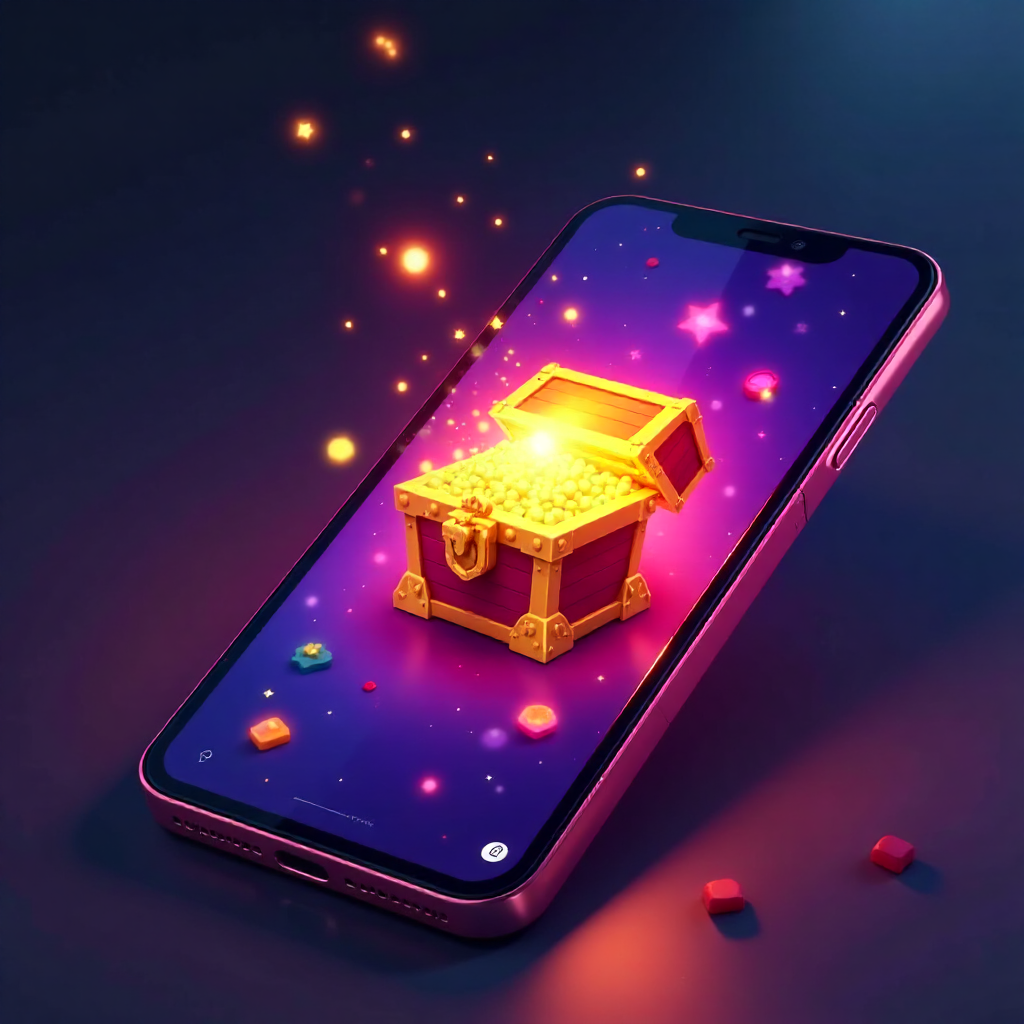
In gaming terms, this shows up as chest drops that might contain rare items, spin-the-wheel bonuses after a level, or random card pulls that occasionally deliver something extraordinary. The uncertainty is the feature, not a side effect. Each pull, each spin, each tap feeds the loop — and the brain learns to crave the next one before the current reward has even landed.
Game Design Features Engineered for Engagement
Beyond the core dopamine loop, specific design mechanics layer additional psychological hooks into the experience. Each one targets a different aspect of human motivation.
Daily Streaks and Login Bonuses
Daily login bonuses exploit loss aversion — the psychological tendency to feel losses more sharply than equivalent gains. Missing a day doesn't just mean missing a reward; it means breaking a streak, which triggers a mild but real sense of loss. Players return not always because they want to play, but because they don't want to lose what they've built.
Level-Up Sounds and Visual Feedback
The satisfying chime of leveling up, the burst of particles when you clear a board, the screen shake on a critical hit — these aren't cosmetic. They're precisely calibrated sensory feedback designed to trigger small dopamine releases. Over repeated sessions, the brain begins associating the app itself with that pleasurable sensation.
Push Notifications
Push notifications act as external behavioral cues, pulling players back into the game during natural gaps in engagement. "Your energy has refilled." "A friend just beat your score." These messages create a sense of urgency that bypasses the player's deliberate decision-making and taps directly into reactive behavior.
In-App Purchases and Gacha Mechanics
Gacha mechanics — named after Japanese capsule-toy vending machines — combine variable reward schedules with real-money spending. The psychological pull is powerful: you're not buying a specific item, you're buying a chance. That uncertainty amplifies desire in ways that straightforward purchases simply don't. Players often spend more than intended because each pull feels like it might be the one that delivers.
The Role of Social Pressure and FOMO
Human beings are wired for social belonging, and mobile games exploit that wiring extensively. Leaderboards turn casual play into social competition — your score isn't just a number, it's a public statement about where you stand relative to your peers.
Guild events and cooperative challenges add another layer: now other people are depending on your participation. Missing a guild raid doesn't just cost you rewards; it potentially lets down teammates. That social obligation can feel surprisingly strong, even in a digital context.
FOMO — fear of missing out — is amplified by limited-time content. A seasonal event that runs for 72 hours, a character available only this weekend, a battle pass that expires at the end of the month. These mechanics create artificial scarcity, transforming optional content into something that feels urgent. The emotional logic is: if I don't play now, I lose access forever.
Together, social validation and FOMO create a feedback system where playing feels rewarding and not playing feels like a social and material loss. That asymmetry is intentional.
When Casual Play Becomes Compulsive: Spotting the Signs
The line between enjoyable play and compulsive behavior isn't always obvious, and it doesn't require dramatic intervention to address. A few honest questions can help locate where you are on that spectrum.
- Do you feel irritable or restless when you can't play?
- Have you tried to cut back and found it harder than expected?
- Are sessions regularly longer than you intended?
- Is gaming displacing sleep, exercise, or time with people you care about?
- Do you play primarily to escape stress or negative feelings rather than for enjoyment?
One or two of these occasionally is normal for any engaging hobby. A consistent pattern across several of them suggests the behavior has shifted from recreational to something closer to compulsive behavior — where the activity is driven by the need to avoid discomfort rather than the pursuit of pleasure.
It's worth noting that gaming disorder is recognized by the World Health Organization as a clinical condition, though it affects a small minority of players. Most people who feel they play "too much" are dealing with habit patterns, not a clinical disorder — and habit patterns respond well to simple, practical adjustments.
Playing Smarter: Staying in Control Without Quitting
The goal isn't to stop playing — it's to play intentionally. A few concrete strategies make a significant difference without requiring you to give up games you genuinely enjoy.
Manage Notifications First
Turning off push notifications is the single highest-leverage change most players can make. Notifications are designed to pull you in reactively. Disabling them means you choose when to play, rather than responding to a prompt. Most games function perfectly well when you check them on your schedule.
Use Screen Time Tools Deliberately
Screen time management features on both iOS and Android let you set daily limits per app. The key is setting limits before you feel like you need them — proactive boundaries are far easier to maintain than reactive ones. A 45-minute daily cap on a specific game is a decision made calmly; trying to stop mid-session is a decision made under the influence of the dopamine loop.
Schedule Sessions Like Other Activities
Treating gaming as a scheduled activity — "I play after dinner for 30 minutes" — removes the impulsive, fill-every-gap pattern that leads to overconsumption. It also makes the sessions more enjoyable, because you're choosing them rather than drifting into them.
Recognize the Mechanics in Real Time
When you feel the urge to do one more pull or stay for one more level, pause and name what's happening: "This is a variable reward schedule. This is FOMO." That moment of labeling activates the prefrontal cortex — the part of the brain involved in deliberate decision-making — and creates just enough distance to make a conscious choice.
Why Understanding This Makes You a Better Player
Knowing how these mechanics work doesn't ruin games — it actually improves the experience. When you understand why a gacha pull feels exciting, you can enjoy the excitement without being controlled by it. When you recognize a daily streak for what it is, you can choose to maintain it because it's fun, not because you're afraid of breaking it.
The flow state — that absorbed, effortless feeling when a game is perfectly calibrated to your skill level — is a genuinely valuable psychological experience. Games that produce it are worth your time. The difference between healthy engagement and problematic play often comes down to whether you're seeking that flow state or escaping something else.
Players who understand the psychology behind mobile gaming tend to make better choices about which games they invest in, how much they spend, and when to put the phone down. That awareness is a skill, and like any skill, it gets easier with practice. The games aren't going anywhere — and neither is your ability to enjoy them on your own terms.
Frequently Asked Questions
Is mobile gaming addiction a recognized medical condition?
Gaming disorder is recognized by the World Health Organization as a clinical condition characterized by impaired control over gaming, increasing priority given to gaming over other activities, and continuation despite negative consequences. However, it affects a relatively small proportion of players — most people who feel they play too much are dealing with strong habits rather than a clinical disorder.
Are free-to-play games more addictive than paid ones?
Generally, yes — free-to-play games are designed around engagement metrics and monetization systems (like gacha and in-app purchases) that rely on keeping players active as long as possible. Paid games typically don't have the same financial incentive to maximize session length, so they tend to use fewer compulsive design patterns.
How do I know if I'm playing too much?
The clearest signal is whether gaming is displacing things that matter to you — sleep, relationships, work, physical activity — without your conscious agreement. Feeling unable to stop when you want to is another strong indicator. Occasional long sessions aren't a problem; a consistent pattern of playing longer than intended, or feeling anxious when you can't play, is worth addressing.
Do game developers intentionally design for addiction?
Most developers would frame it as designing for engagement rather than addiction — but the mechanics used (variable rewards, streaks, FOMO-driven events) are drawn directly from behavioral psychology research. The intent is to maximize time spent in the app; the psychological effects are well understood by the teams building these systems.
Can mobile gaming ever be genuinely relaxing and healthy?
Absolutely. Games that produce a flow state, offer satisfying puzzle-solving, or provide a low-stakes creative outlet can be genuinely restorative. The key variables are whether you're playing by choice, whether it fits within a balanced routine, and whether the game rewards your engagement rather than just exploiting your psychology. Plenty of mobile games do the former — and those are worth finding and enjoying.