How Casual Gaming Can Engage Cognitive Skills and Reflexes
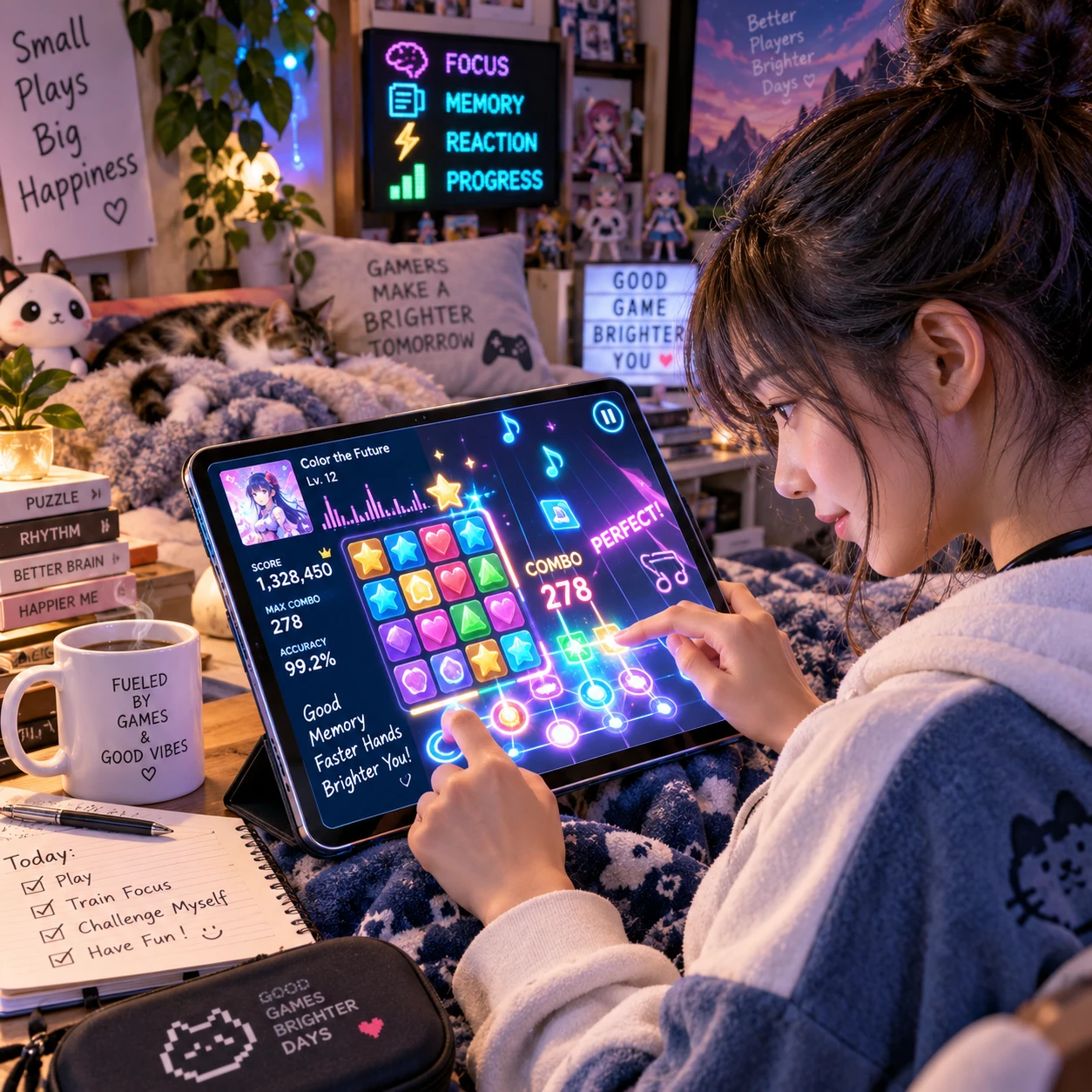
A quick puzzle on a phone or a rhythm game between errands can ask your brain and hands to do more than simply follow a screen. Casual games often involve noticing changes, remembering information, choosing an action, and responding at the right moment. The exact demands depend on the game, and practicing a task while playing does not guarantee lasting improvement outside the game.
What cognitive skills do games engage?
Games can engage cognitive skills such as attention, working memory, and problem-solving by asking players to notice information, hold it briefly in mind, and use it to make decisions. Which skills come into play depends on the rules and challenges of a particular game.
Attention helps you focus on relevant cues: a new tile, a changing target, or a timer nearing zero. Some games also require shifting attention between several details, such as tracking a moving object while scanning a board for a match.
Working memory is the ability to keep information in mind for a short time and use it. In a matching game, you may remember where a symbol appeared a few turns earlier. In a word or number puzzle, you might hold several clues in mind while testing possible answers.
Problem-solving and decision-making appear when a move has consequences. You may compare options, predict what will happen next, and revise your plan after a result changes the board. These are real mental demands during play, but they are specific to the task. Doing well at a particular puzzle is not, by itself, proof that general memory or reasoning has improved.
How games put reflexes and reaction time to work
Fast-paced games put reflexes and reaction time to work by presenting visual or timing cues that call for a quick response. Players notice a signal, choose an action, and use a controller, mouse, or touchscreen to carry it out.
Reaction time describes the interval between noticing a cue and beginning a response. In a casual arcade game, that cue might be an obstacle appearing in a character’s path. In a timing game, it could be a note reaching a marked line. Repeated play gives you practice responding to that game’s cues and controls.
Hand-eye coordination matters when your eyes guide a precise movement: tapping a target, dragging a piece into place, or steering around an obstacle. Rhythm games add another layer because the action needs to match a beat or visual prompt. Miss the cue, and immediate feedback shows you that your timing was off.
There are limits to what this practice means. Familiar controls and predictable patterns can make responses feel faster in one game, but that does not establish that reflexes will improve in every setting. A new interface, a different kind of cue, or simple tiredness can change how quickly and accurately someone responds.
Different casual games, different mental challenges
Different casual games emphasize different mental challenges: puzzles often involve planning, pattern games call on visual attention and memory, and timing games ask for rhythmic responses. A game can engage several skills at once, but one or two usually stand out.
- Puzzle games: Tile, word, and logic puzzles can involve problem-solving, comparing options, and planning a sequence of moves. A sliding puzzle, for example, asks you to picture how a move will affect the open space and the pieces around it.
- Pattern and matching games: These games encourage players to scan for similarities, track changing arrangements, and sometimes remember where items appeared. The challenge may shift from spotting a pair to deciding which match helps most.
- Timing and rhythm games: These ask you to watch for cues and tap, swipe, or press in time. They can engage reaction time, attention, and hand-eye coordination, particularly when the sequence changes speed or pattern.
- Casual arcade games: Dodging obstacles or collecting items can combine visual scanning, quick choices, and controlled movements. The pace and precision required vary widely.
Choose a game by the kind of effort you enjoy, not by a promise that it will train a particular ability. A relaxed word puzzle may suit someone who wants to think without a timer; a rhythm game may appeal to someone who likes clear cues and quick feedback. Either can be engaging, but they offer different experiences.
What happens while you play?
While playing, you notice a cue, decide what it means, choose an action, and adjust after seeing the result. This cycle of perception, decision, movement, and feedback is how a game turns rules into moment-to-moment mental and physical demands.
Imagine a matching puzzle. You scan the board and spot two similar symbols. Before making a move, you consider whether matching them will open space or block a useful option. You act, see the board change, and update your plan. Attention helps you find the symbols, working memory helps you keep track of earlier moves, and problem-solving helps you choose a strategy.
In a rhythm game, the cycle is shorter: watch for a note, judge when it reaches the target, tap, then use the score or sound as feedback. With practice, you may learn the game’s patterns and controls. That can make the task easier through familiarity, though a new song or unfamiliar cue may still require concentration.
This cycle also explains why difficulty matters. If every task feels automatic, you may pay less attention. If cues come too fast or rules are confusing, mistakes can become frustrating rather than useful feedback. A good casual challenge feels manageable, with enough variation to keep you engaged.
How to make casual gaming more purposeful
To make casual gaming more purposeful, choose a game that fits the skill or challenge you want to focus on, play attentively, and keep sessions manageable. A simple plan helps you enjoy the activity without turning every round into a test.
- Pick one focus. For visual scanning, try a pattern or matching game. For planning, choose a puzzle without a strict timer. For timing, try a rhythm game that lets you adjust the speed or difficulty.
- Use a clear challenge. Set a goal such as completing a level carefully, testing a new strategy, or keeping a steady rhythm. Avoid judging success only by a high score; noticing why a move worked can make play more engaging.
- Vary the demands. Rotate between a puzzle, a pattern game, and a timing game if you enjoy variety. Different games call for different actions, but switching does not guarantee broad cognitive gains.
- Stop when focus fades. If you are tapping randomly, making repeated mistakes, or no longer enjoying the game, take a break. Continuing while tired may add time without adding much attention.
Purposeful play is about choosing an enjoyable challenge and paying attention to what you do. It does not require tracking every score or treating casual games like a formal training program.
Keeping gaming balanced and expectations realistic
Casual gaming can provide practice with skills used inside a game, but it cannot guarantee lasting cognitive improvement or transfer to everyday tasks. Enjoy it as one leisure activity alongside sleep, study or work, movement, and time away from screens.
A common misconception is that a game marketed around memory or reflexes will automatically improve those abilities in daily life. Often, the clearest progress is game-specific: you learn the rules, recognize recurring patterns, or become more comfortable with the controls. Whether that practice carries over to another task depends on many factors and should not be assumed.
Keep an eye on the experience as well as the clock. Take breaks if your eyes feel strained or your hands become uncomfortable, and avoid letting a game crowd out responsibilities or rest. If a game is no longer fun, choosing something else—or stopping—is a sensible choice.
Can casual games improve reaction time?
Casual games can give you practice reacting to cues within the game, especially in fast-paced arcade and timing games. That does not guarantee faster reactions in other activities, because cues, controls, and conditions can differ.
Which types of games involve problem-solving?
Puzzle games, including logic, word, and tile puzzles, often involve comparing options, planning moves, and adjusting a strategy. Some matching games also ask you to solve a problem when each move changes what is available next.
Do gaming skills transfer to real-life tasks?
Transfer is possible in some situations, but it is not automatic or guaranteed. Improving at a particular game may reflect familiarity with its rules and patterns rather than a general change in attention, memory, or reflexes.
How long should a casual gaming session last?
There is no single session length that suits everyone. Choose a stopping point that fits your schedule and comfort, take breaks when you need them, and stop sooner if play interferes with sleep, responsibilities, or enjoyment.