How to Monetize Your Indie Game Successfully: Proven Strategies for Independent Developers
Building an indie game is one thing. Getting paid for it is another challenge entirely. The good news is that independent developers have more monetization options today than at any point in gaming history — and many of them don't require a publisher, a massive marketing budget, or a team of fifty people. What they do require is a clear strategy matched to your game's genre, audience, and platform.
Choose the Right Monetization Model for Your Game
The right monetization model depends on your game type, target audience, and how players are expected to engage over time. A one-size-fits-all approach rarely works in indie development.
There are three primary structures to consider: premium pricing, free-to-play (F2P), and hybrid models that blend elements of both. Premium works well for narrative-driven or highly polished experiences where players expect a complete product upfront — think puzzle games or short story adventures. Free-to-play fits casual and mobile titles where the goal is volume: get as many players in the door as possible, then convert a percentage to paying users.
Hybrid models are increasingly common among successful indie titles. A game might launch as a low-cost premium purchase on Steam while offering optional cosmetic DLC after launch. Or it could be free on mobile with rewarded ads and optional in-app purchases for convenience features. The key is alignment: your monetization model should feel like a natural extension of how people actually play your game, not an obstacle dropped in front of them.
Before committing to a model, ask yourself two questions: How long will players engage with this game? And what are they willing to pay for? Short, self-contained experiences tend to suit premium pricing. Games with ongoing content loops — daily challenges, seasonal events, unlockable characters — are better candidates for F2P or subscription-adjacent structures.
Making the Most of In-App Purchases Without Alienating Players
In-app purchases work best when they offer genuine value without creating an unfair advantage. The golden rule for indie developers targeting casual audiences: never sell power, sell expression.
Cosmetic items — skins, color palettes, character outfits, decorative effects — are the safest and most player-friendly form of IAP. Players who love your game want to personalize it. They're happy to spend a few dollars on a hat for their character if it doesn't affect gameplay balance. This approach, used widely in casual and mid-core titles, keeps non-paying players from feeling disadvantaged while giving dedicated fans a way to support the developer.
Convenience purchases are a step further: things like extra save slots, faster progression for impatient players, or skipping a wait timer. These are acceptable in moderation, but watch the line carefully. When convenience purchases start to feel like the game is withholding a smooth experience unless you pay, retention drops fast.
A common mistake is launching with too many IAP options at once. Start with two or three well-designed offerings, observe what players actually buy, and expand from there. Overloading a storefront signals desperation rather than value.
Ad Monetization: How to Integrate Ads Without Ruining the Experience
Ad monetization can generate consistent revenue for casual indie games — but only if the ads are placed thoughtfully. Poorly timed or intrusive ads are one of the fastest ways to lose players permanently.
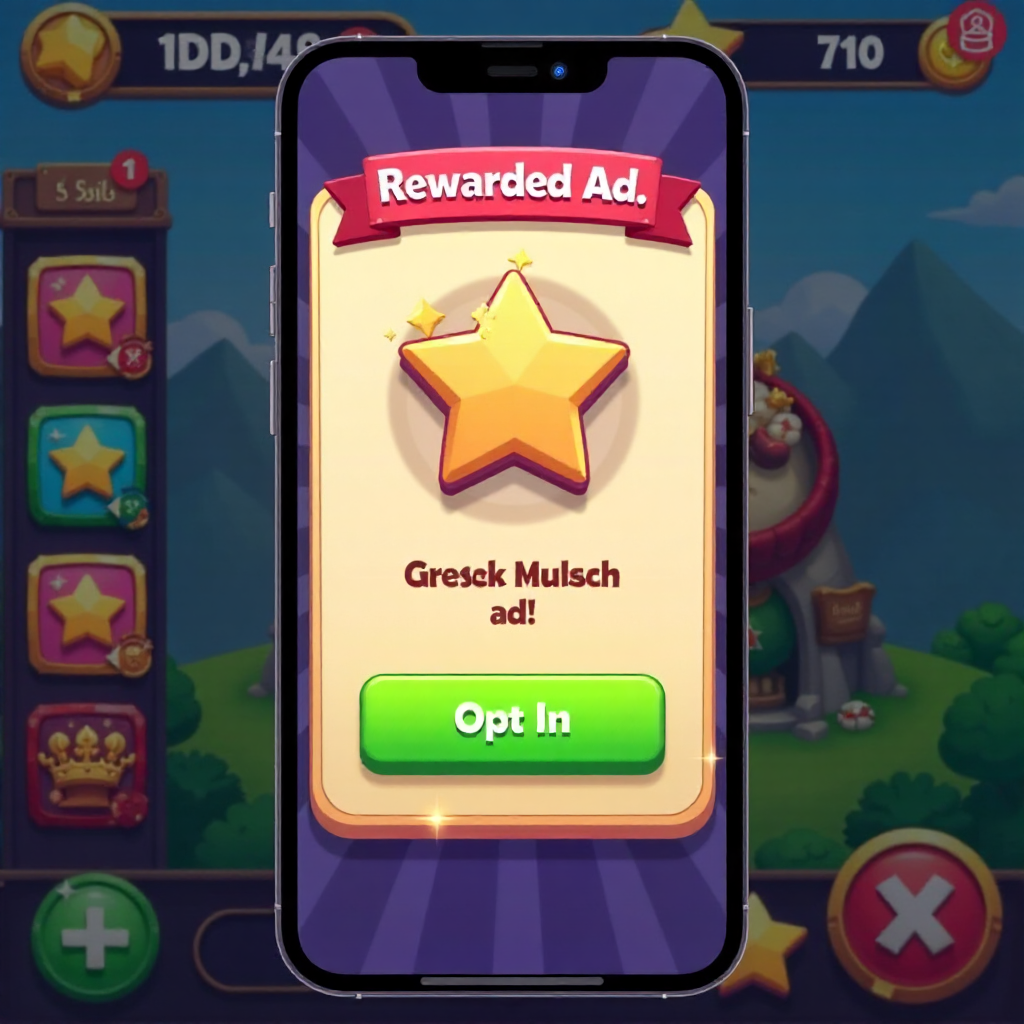
Rewarded ads are the most player-friendly format available. The player chooses to watch a short video in exchange for an in-game benefit — an extra life, bonus currency, or a hint. Because the interaction is voluntary, it creates a positive association rather than frustration. For casual games especially, rewarded ads often outperform other ad formats in both revenue per impression and player sentiment.
Interstitial ads — full-screen ads that appear between natural breaks in gameplay — can work, but frequency matters enormously. Showing an interstitial after every single level will tank your ratings. Showing one every four or five levels, at a natural pause point, is far less disruptive. Banner ads sit at the bottom or top of the screen and generate lower revenue per impression, but they're passive and don't interrupt play. They work best as a baseline layer of income alongside other formats.
A practical approach: use rewarded ads as your primary ad format, add interstitials at session break points only, and consider banners only if your game has a lobby or menu screen where players spend time. Test combinations and watch your session length data — if average session time drops after adding ads, you've gone too far.
Picking the Right Platform for Maximum Revenue Potential
Platform choice shapes your audience size, revenue share, and discoverability from day one. Each major platform has a different value proposition for indie developers.
Steam remains the dominant PC gaming marketplace, with a built-in audience of millions and robust tools for wishlists, early access, and seasonal sales. The revenue split is 70/30 in your favor (improving to 75/25 and 80/20 at higher sales thresholds). Discovery is competitive, but a well-executed wishlist campaign can generate meaningful launch momentum. Steam suits premium and hybrid models well.
Itch.io operates on a pay-what-you-want model and takes a smaller cut — you set your own revenue split, and many developers choose to give itch.io 10-20% while keeping the rest. It's a more intimate platform with a community that actively supports indie creators. Revenue potential is lower than Steam in absolute terms, but itch.io is excellent for game jams, experimental projects, and building an early audience.
Mobile app stores — the Apple App Store and Google Play — offer the largest potential audience for casual games, but also the most competitive environment. Both stores take a 30% cut (reduced to 15% for smaller developers under certain thresholds). Free-to-play with ads and IAPs is the dominant model on mobile, and discoverability depends heavily on ASO (app store optimization) and early review volume.
Many successful indie developers publish across two platforms simultaneously — Steam for PC players and a mobile store for casual reach — adapting the monetization model to each context.
Building a Community Before and After Launch
Community building is one of the highest-return investments an indie developer can make, and it costs more time than money. A loyal audience drives launch sales, generates word-of-mouth, and sustains long-term monetization.
On Steam, wishlists are the single most important pre-launch metric. Each wishlist converts to a sale notification when your game launches, creating an immediate spike in revenue. Start your Steam page as early as possible — even months before release — and drive traffic to it through social media, game jams, and press coverage.
Social platforms like TikTok, YouTube Shorts, and X (formerly Twitter) are where indie games get discovered organically. Short development videos, behind-the-scenes clips, and gameplay previews perform well without requiring a production budget. Authenticity resonates with gaming communities; showing your process, including the messy parts, builds genuine connection.
Discord servers give your most dedicated players a home. A well-moderated community generates feedback, beta testers, and advocates who will recommend your game unprompted. After launch, community engagement keeps players returning — which directly supports any ongoing monetization through IAPs, DLC, or seasonal content.
Alternative Revenue Streams: DLC, Crowdfunding, and Publishing Deals
Beyond the core monetization model, several supplementary income streams can meaningfully increase total revenue for indie developers.
Cosmetic DLC and battle passes extend the earning life of a game well past its launch window. A well-timed DLC expansion — new levels, a new character, a story chapter — gives existing fans a reason to spend again. Battle passes work best in games with regular play sessions and a social or competitive element; they create predictable recurring revenue if your player base is engaged enough to return weekly.
Crowdfunding through platforms like Kickstarter or Indiegogo serves two purposes: it funds development and validates demand before a single copy is sold. A successful campaign also generates press attention and community momentum. The caveat is that crowdfunding requires significant upfront effort in campaign preparation, and failure is public. It suits developers with a clear vision and some existing audience.
Patreon works particularly well for developers who create content around their game — devlogs, tutorials, design discussions. Supporters pay a monthly amount in exchange for early access, behind-the-scenes content, or exclusive in-game items. It's a slower revenue stream but provides predictable monthly income during development.
Indie publishing deals are worth considering if you want marketing support and upfront funding in exchange for a revenue share. Publishers like Devolver Digital, Raw Fury, or smaller regional publishers take a percentage of sales but bring distribution reach and promotional expertise that many solo developers can't replicate alone. Read contracts carefully and understand the recoupment terms before signing anything.
Tracking What Works: Key Metrics Every Indie Dev Should Monitor
Monetization strategy without measurement is guesswork. A handful of core metrics tell you whether your approach is working and where to adjust.
Player retention — specifically Day 1, Day 7, and Day 30 retention rates — shows how many players return after their first session. Low Day 1 retention often signals an onboarding problem. Low Day 30 retention in a game built around ongoing IAPs or ads is a revenue ceiling problem. Industry benchmarks vary by genre, but for casual mobile games, Day 1 retention above 40% and Day 7 above 15% are generally healthy targets.
Lifetime value (LTV) measures the average total revenue generated per player over their entire engagement with your game. Comparing LTV against your cost to acquire a player (if you're running paid ads) tells you whether your monetization model is sustainable. If you're spending more to acquire players than they generate in revenue, something in the funnel needs to change.
Conversion rate — the percentage of free players who make at least one purchase — is the most direct indicator of IAP and premium upgrade effectiveness. A low conversion rate with high retention suggests players love the game but don't see enough value in paid offerings. A high conversion rate with low retention suggests the opposite problem.
Tools like Unity Analytics, GameAnalytics, or even basic Firebase dashboards give indie developers access to these metrics without enterprise-level costs. Set up tracking before launch, not after — retroactive data collection misses the most valuable early player behavior.
Frequently Asked Questions
What is the best monetization model for a first-time indie developer?
For a first game, premium pricing on a platform like itch.io or Steam is often the simplest starting point. It requires no ongoing live operations, teaches you how players respond to your pricing, and delivers clean, predictable revenue. Free-to-play demands more infrastructure and player volume to work effectively.
Can a casual indie game make money with ads alone?
It's possible, but challenging. Ad-only monetization requires significant daily active user counts to generate meaningful revenue. Most successful casual games combine rewarded ads with at least one IAP option — typically a one-time "remove ads" purchase — to capture both ad revenue and player goodwill.
How much should I charge for a premium indie game?
Pricing depends on content length, production quality, and comparable titles in your genre. Short casual experiences ($2–$5) compete differently than 10-hour narrative games ($10–$20). Research what similar games charge on your target platform and price within that range, erring slightly lower for your first release to reduce the barrier to entry.
Is free-to-play a good choice for solo developers?
F2P can work for solo developers, but it demands ongoing content updates, live events, and active community management to retain players long enough to generate meaningful revenue. If you can't commit to post-launch support, a premium or one-time-purchase model is more sustainable for a solo team.
When is the right time to add DLC to an indie game?
Add DLC when your core game has a stable, satisfied player base and you have content that genuinely extends the experience rather than content that should have been in the base game. Launching DLC within the first few weeks of release often signals that the base game was underdelivered. A few months post-launch, once reviews are established and player feedback is incorporated, is typically the right window.